Friday, July 11, 2014

Is Nissan's New $5,499 Replacement Battery For The Leaf A Game Changer?


Image CC licensed by: Kevin Krejci

Nissan Leaf drivers will be delighted to hear that Nissan will soon be offering a surprisingly cheap $5,499 replacement battery for its flagship electric vehicle. The vastly reduced battery cost will make the Leaf an even bigger money saver in the long run and establish a new precedent in the growing EV market.

The new battery will also address concerns over the current Leaf battery’s loss of capacity in extremely hot environments. Also referred to as the “Lizard Battery”, the new chemical formulation will ensure the battery maintains capacity when exposed to hot temperatures for extended periods of time. Ultimately, owners of 2012 and 2013 Leafs will be getting a far superior battery for one third the price it was a year or two ago.

And while the details have not yet been confirmed, Nissan may also be releasing a special financing program for the battery replacement. Starting at $100 per month, Leaf owners could pay for the battery over the span of five years, thus allowing them to avoid shelling out several thousand dollars outright.

One criticism lodged against electric vehicles is that the cost to replace their batteries is in the tens of thousands – which is often half the price of the car. Therefore, any cost-savings in fuel and maintenance over an EVs lifespan would be significantly diminished (although it would still be a money saver in the long-run).

And while Nissan will likely be losing some money on its cheap battery replacement, it is projecting lower battery construction costs over time. Economies of scale and improved technology will make the replacement battery cheaper in a few years when the first Leaf owners start making replacement requests.

It will be interesting to see how other EV auto-makers respond to Nissan’s aggressive pricing plan. 

Obviously, Nissan is trying to appeal to the average consumer’s car budget. But will the $5,499 battery replacement program be enough to make the Leaf the more appealing EV option?

We'll just have to wait and see.


Joseph Tohill is a freelance writer and online communications specialist for organizations in the sustainability sector. He has a B.A. in Interdisciplinary Studies from the University of British Columbia and spent most of his academic career studying sustainable urban development; namely the interdisciplinary relationship between built form and natural environment.

Labels: , , ,

Friday, April 4, 2014

Evs by The Numbers: A Closer Look At Electric Vehicle Growth Since 2011


Image CC by: Travis Sweet

If one were to look at the EV market as a proportion of the total global automobile market, one would be looking at a very small number indeed. Of the estimated billion cars on the road, only 400,000 would be classified as an electric vehicle. 

However, EVs have only really been on the mainstream market since 2011, so their numbers are expected to be small. Where EVs really shine is in their growth over the past few years.

According to the Center for Solar and Hydrogen Energy Research in Germany, the number of EVs on the road in 2012 was 100,000. In 2013 the number of EVs totalled 200,000, and in 2014 the number has reached 400,000. This is a clear doubling trend since 2012 and leaves a lot to be optimistic about in the coming years.

In fact, for a sector that is still only a few years old, EVs have been performing exceptionally well. For example, EVs are being adopted much faster than when hybrids were released. In only 3 years, EVs have achieved the same number of sales that hybrids took 6 years to achieve.

The top three markets for EVs include the US (174,000 vehicles), Japan (68,000 vehicles), and China (45,000 vehicles).

A closer look at particular car manufacturers reveals growing competition to capitalize on rising interest in EVs. Interestingly, car manufacturers have realized that specialization is key when it comes to attracting customers. For years Tesla has been the “go-to” luxury EV, with its Model S boasting over 200 miles of range and high consumer ratings (it was voted the best overall car in 2014). However BMW and Cadillac have now decided to cater to the luxury EV market with the release of the i3 and ELR respectively.  

For cars more within the price range of the average American, the logical choices include the Chevy Volt and the Nissan Leaf. While the Volt has sold roughly 58,200 units in the US to date, the Leaf is rapidly catching up with 47,300 units sold. If March’s numbers are any indication, Leaf sales could outpace Volt sales by the end of the year.

It’s an exciting time to be a part of the growing EV market. Even retailers and commercial real estate developers are noticing numerous benefits by tapping into the EV economy. With all the EVs hitting the road over the next few years, more and more drivers will be seeking out EV charging stations. 

This provides a unique opportunity to provide a valuable EV amenity for the growing EV market, while improving a company’s corporate image and generating some additional revenue.


Joseph Tohill is a freelance writer and online communications specialist for organizations in the sustainability sector. He has a B.A. in Interdisciplinary Studies from the University of British Columbia and spent most of his academic career studying sustainable urban development; namely the interdisciplinary relationship between built form and natural environment.

Labels: , , , , , , , ,

Friday, March 7, 2014

Tapping into EV Demographics: Matching Consumer Demand with Supply In Retail


Image CC Licensed By: Richard Masoner

What do Walgreens, Kohls, and Wal-Mart have in common? Aside from being large US retailers, all of these companies have also installed EV charging stations at many of their stores. And these are not the types of businesses that randomly blow money on the latest gadgets. They make calculated business decisions about the services they provide based on market research, demographic trends, and proven technologies.

It’s safe to say that when it comes to installing EV charging stations, these retail giants have done their homework. 

Other retailers still sitting on the fence about EV charging stations would be well-advised to look at the EV market a little closer to see how they can capture EV drivers in their business models. In particular, they should look at the demographic and social trends that are driving growth in the EV market at the moment.

One surprising element of EV demographics is that environmental concerns are only some amongst several reasons a consumer may buy an electric car. For instance, a recent study of EV drivers in California revealed some interesting information pertaining to Nissan Leaf, Chevy Volt, and Toyota Prius owners.

Environmental concerns came out on top for Nissan Leaf drivers, with 38% citing environmental concerns as their primary reason for purchasing an electric vehicle. Given the Leaf is an all-electric vehicle, this makes sense, as Leaf drivers are completely reliant on the electric grid for power, rather than supplementing electric power with fossil fuels.

Interestingly, Chevy Volt drivers claimed saving money by using cheap electricity was their primary reason for embracing an EV, followed by access to HOV lanes. Environmental concerns came in third place, with 18 percent of Volt drivers citing the environment as a buying motivation. 

Toyota Prius drivers were most concerned with access to HOV lanes, followed with saving money and curbing environmental degradation.

While environmental concerns factored into the purchasing decisions of all groups of EV owners, clearly there were other factors at play. EVs are not just being embraced by eco-minded consumers – they are also embraced by individuals looking to save money and get from point A to point B faster.

In addition, EVs are winning major awards not just amongst other EVs, but amongst all cars in general. For instance, Consumer Reports picked the Tesla Model S as the best overall car of the year for 2014. Top factors in their decision were the Model S’ emissions free driving experience, 225 mile driving range, internet access, and cutting-edge interface. 

Therefore, amongst all automobile drivers, EVs are becoming a more mainstream, highly desirable form of transportation that are only going to become more popular in the coming years. 

Consequently, while it would make sense for retailers to install EV charging stations to green their corporate image, the fact that EVs appeal to a wide range of people means that there can be economic and customer service motivations to installing a charging station as well. The demographic trends suggest EVs are catching on and becoming an increasingly important form of personal transportation. 

Retailers can use this information to their advantage when determining how to give their business a competitive advantage over other retailers in the years to come. And one of the ways they can improve their competitive advantage is to install EV charging stations, an increasingly in-demand consumer amenity.


Joseph Tohill is a freelance writer and online communications specialist for organizations in the sustainability sector. He has a B.A. in Interdisciplinary Studies from the University of British Columbia and spent most of his academic career studying sustainable urban development; namely the interdisciplinary relationship between built form and natural environment.

Labels: , , , , , , ,

Thursday, August 11, 2011

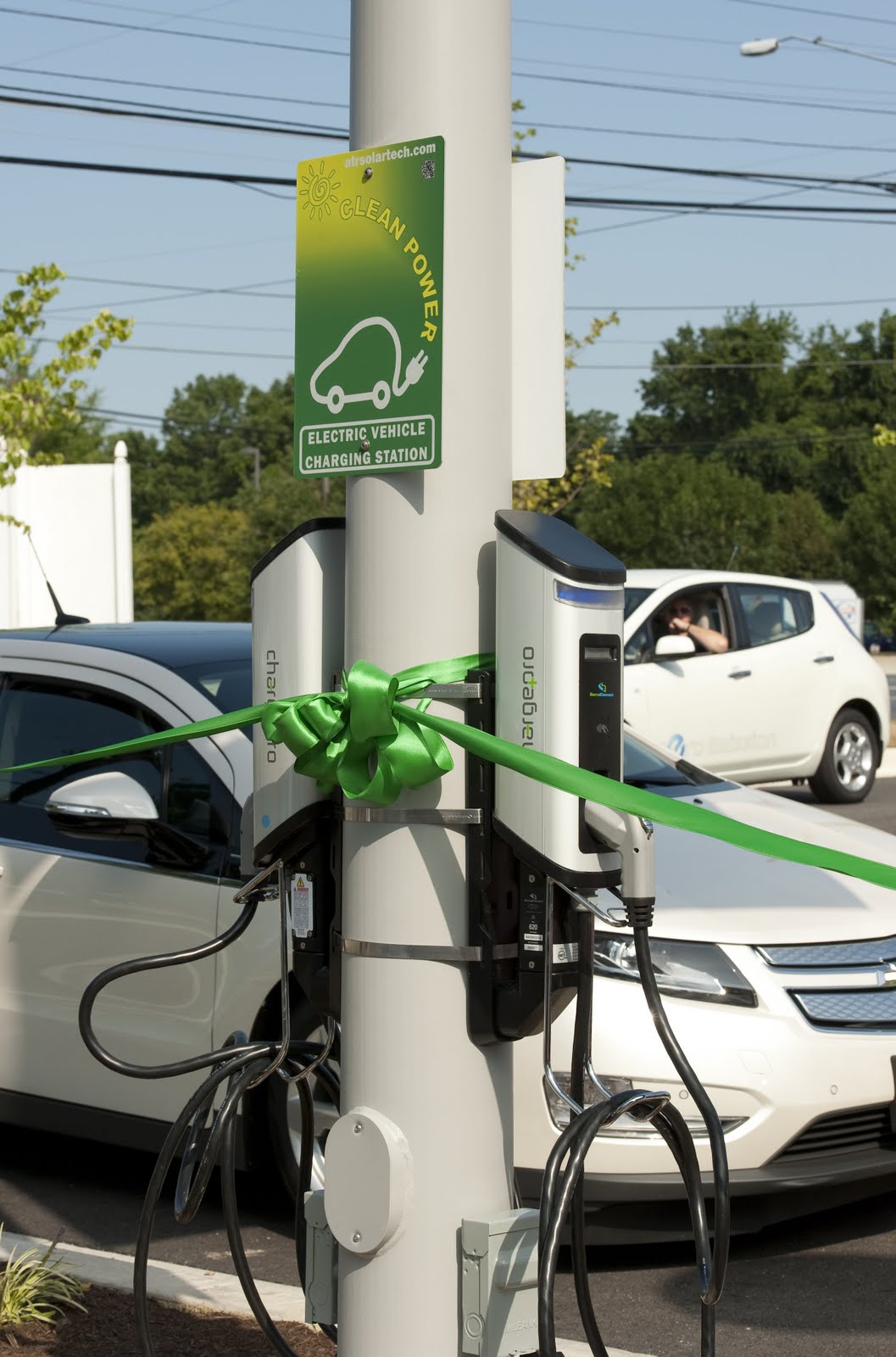
ChargePro Charging Station with Solar Tracking Device!

Missed the event?

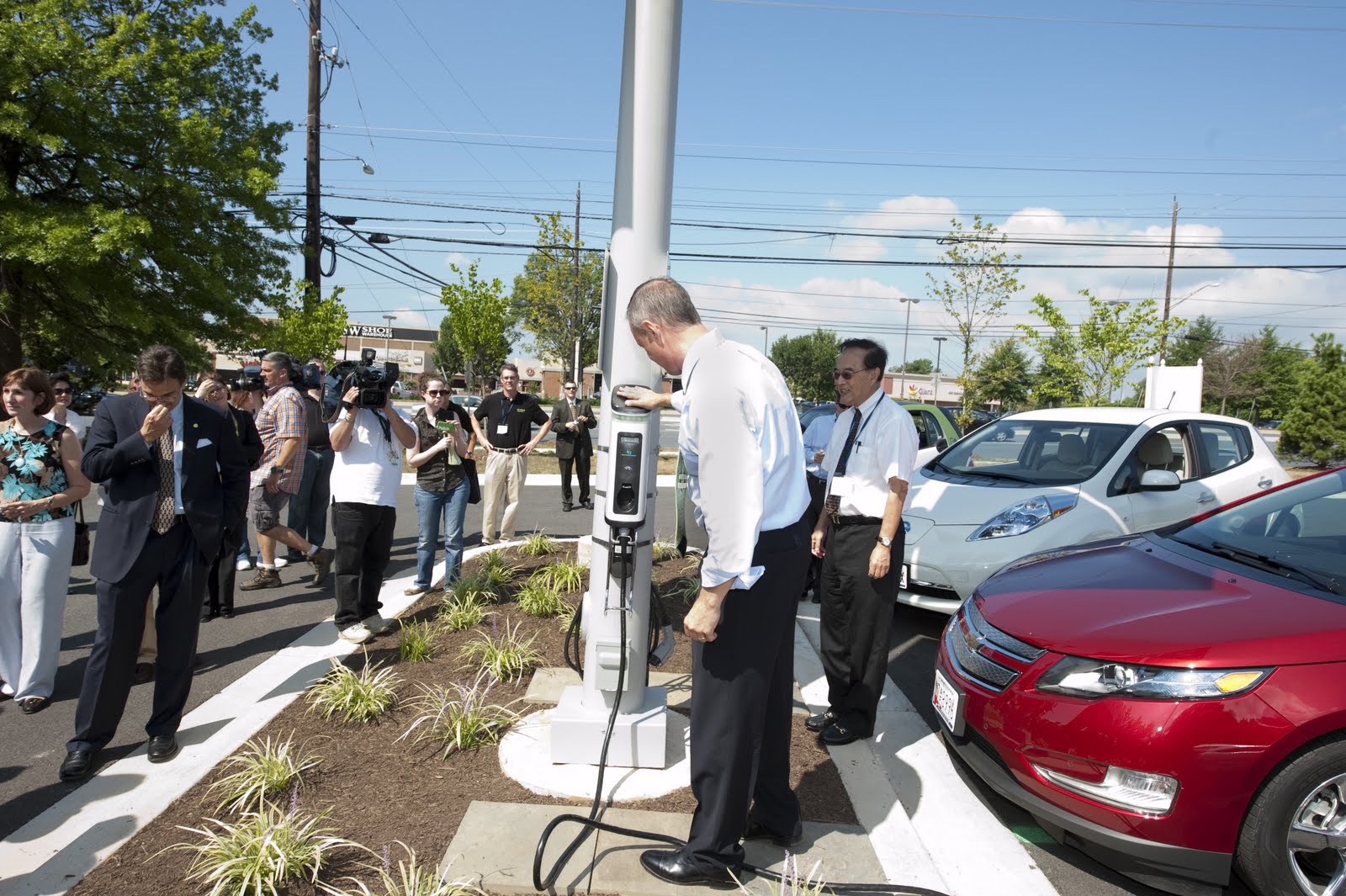
Here are the photos from our recent event that includes photos of our charging station that was installed with a solar tracking device!  Thanks to everyone who came out and helped us welcome this new technology!


Thank You & Happy Charging!

- ChargePro


*All photos courtesy of Governor O'Malley photographer.  You can view more photos HERE.

Labels: , , , , , , , , , , , ,